Relaxation Techniques to Reduce Stress

Ways to Calm Your Nervous System and Support a Healthy Spine
Stress is one of those things people assume lives in the mind. We talk about stressful jobs, stressful schedules, and stressful conversations. It sounds mental, emotional—something you “think” your way through.
But step into any chiropractic office, and you’ll see a different side of the story.
Stress shows up in the body.
It appears as tight shoulders that never quite relax. It lingers in tension headaches that return at the end of long days. It settles into the neck and upper back, where muscles stay slightly contracted, almost like they’re waiting for the next problem to appear.
Over time, many people stop noticing the tension at all. It becomes the background noise of daily life.
The nervous system, however, notices everything.
Your body constantly reacts to signals like deadlines, poor sleep, long hours on screens, emotional strain, and subtle posture changes. Chronic stress can keep the nervous system on alert, tightening muscles, causing shallow breathing, and straining the spine.
This is one reason stress-related symptoms frequently appear in the neck and upper back.
The upper cervical spine—the top two vertebrae of the neck, called the atlas and axis—plays an especially important role in protecting the brainstem and supporting communication between the brain and body. When this area is strained or misaligned, the nervous system can become less efficient at regulating stress responses. (Rosenberg et al., 1998, pp. 1497-1500)
That doesn’t mean stress is unavoidable. It means the body sometimes needs help returning to balance.
Relaxation techniques can help calm the nervous system and release muscle tension. Combined with proper spinal alignment, these techniques help many people become more resilient to stress.
Stress Awareness Month is a good reminder that relaxation is not a luxury. It is a form of maintenance for the nervous system and for the spine that protects it.
Why Stress Affects the Body So Quickly

To understand why relaxation techniques matter, it helps to understand what stress actually does inside the body.
When the brain perceives a threat—whether it’s a real danger or just a demanding situation—it activates the sympathetic nervous system. This is commonly called the fight-or-flight response, which is the body’s natural way of preparing to respond to stress or danger.
This response prepares the body to act quickly.
Heart rate increases.
Breathing becomes faster.
Muscles tighten.
Blood flow shifts toward major muscle groups.
These reactions were incredibly helpful thousands of years ago when stress meant escaping physical danger. The system still works the same way today—even if the “threat” is an overflowing inbox or a difficult meeting.
The problem is that modern stress rarely ends quickly.
When stress persists, the nervous system may remain partially stuck in this heightened state. Muscles stay tight, breathing remains shallow, and the body never fully returns to recovery mode.
That recovery mode is controlled by another branch of the nervous system called the parasympathetic nervous system. This system helps slow the heart rate, release tense muscles, support digestion, and allows the body to repair itself. It is often referred to as the 'rest and digest' system.
Healthy nervous systems move fluidly between these two states—alert when necessary, relaxed when appropriate.
Chronic stress disrupts that balance.
Research by the American Psychological Association shows that prolonged stress contributes to muscle tension, headaches, trouble sleeping, and persistent tiredness. These symptoms usually first affect body areas already under mechanical strain—meaning parts already stressed by poor posture or repetitive movements, especially the neck and upper back.
This is where posture and spinal alignment come into the conversation.
The Hidden Connection Between Stress and Posture

If you were to quietly observe people during a stressful moment, you’d likely see a familiar posture emerge.
Shoulders begin to round forward.
The head drifts slightly in front of the body.
The jaw tightens.
Even breathing patterns change. Instead of deep diaphragmatic breaths, the body shifts toward shallow chest breathing.
Over time, this stress posture can place additional strain on the cervical spine.
The human head weighs roughly 10–12 pounds when balanced directly over the shoulders. When the head shifts forward, even slightly, the neck muscles must work harder to support that weight.
Forward head posture can increase pressure on the cervical spine and surrounding muscles, creating a cycle where stress leads to tension, and tension leads to more stress signals traveling through the nervous system.
The upper cervical region is particularly important here.
The atlas (C1) and axis (C2) vertebrae are the names of the top two bones in the neck. They support the head and help protect the brainstem, which is the part of the brain that controls many automatic functions such as breathing, heart rate regulation, and aspects of the stress response.
When alignment in this area is compromised, communication between the brain and body may become less efficient. Muscles often tighten in an attempt to stabilize the area.
Patients sometimes notice something interesting after receiving a gentle upper cervical adjustment: relaxation techniques suddenly feel easier.
Breathing becomes deeper. Muscles release tension more quickly. The body seems more willing to shift into a calm state.
That’s because the nervous system is no longer working against structural stress in the spine.
Relaxation practices can still help without chiropractic care—but when the spine is properly aligned, those practices often become significantly more effective.
Five Relaxation Techniques That Support Spinal Health

There are countless relaxation methods available today, from meditation apps to yoga classes. While many approaches can be beneficial, some techniques work especially well for calming the nervous system while supporting healthy spinal posture.
The following practices are simple enough to incorporate into daily life, yet powerful enough to create meaningful changes in how the body handles stress.
1. Diaphragmatic Breathing: Resetting the Nervous System
Breathing is one of the few bodily functions that operates automatically (without thinking about it) but can also be consciously controlled. That makes it one of the most powerful tools for influencing the nervous system—your body's network that manages stress and relaxation.
During stressful moments, breathing tends to become rapid and shallow. These quick breaths reinforce the fight-or-flight response.
Diaphragmatic breathing encourages the body to return to a calmer state.
To practice:
• Sit up or lie down comfortably with your shoulders relaxed.
• Place one hand on the chest and one on the abdomen.
• Breath in slowly through the nose, allowing the abdomen to expand.
• Exhale gently through the mouth or nose, letting the abdomen fall.
The goal is to keep the chest relatively still while the diaphragm does most of the work.
This breathing technique stimulates the vagus nerve, which helps control involuntary functions, and activates the part of the nervous system that prompts rest and relaxation. As breathing slows and deepens, the heart rate decreases, and muscles begin to relax.
For many people, even three minutes of slow breathing can noticeably reduce neck and shoulder tension.
2. The Wall Alignment Reset Reminder
Sometimes the simplest posture exercises are the most effective.
The Wall Alignment Reset is a quick way to remind the body what neutral spinal posture feels like.
It’s simple to do:
• Stand with your back against a wall.
• Heels should be a few inches from the wall.
• Hips, upper back, and shoulders touch the wall.
• Gently bring the back of the head toward the wall without forcing it.
Hold this position for about 30–60 seconds while breathing slowly.
Many people notice how far forward their head normally sits once they try this exercise. The wall provides a reference point that helps the body relearn proper alignment.
Over time, practicing this reset throughout the day can reduce strain on the upper spine and help prevent stress-related tension.
3. Micro-Break Relaxation
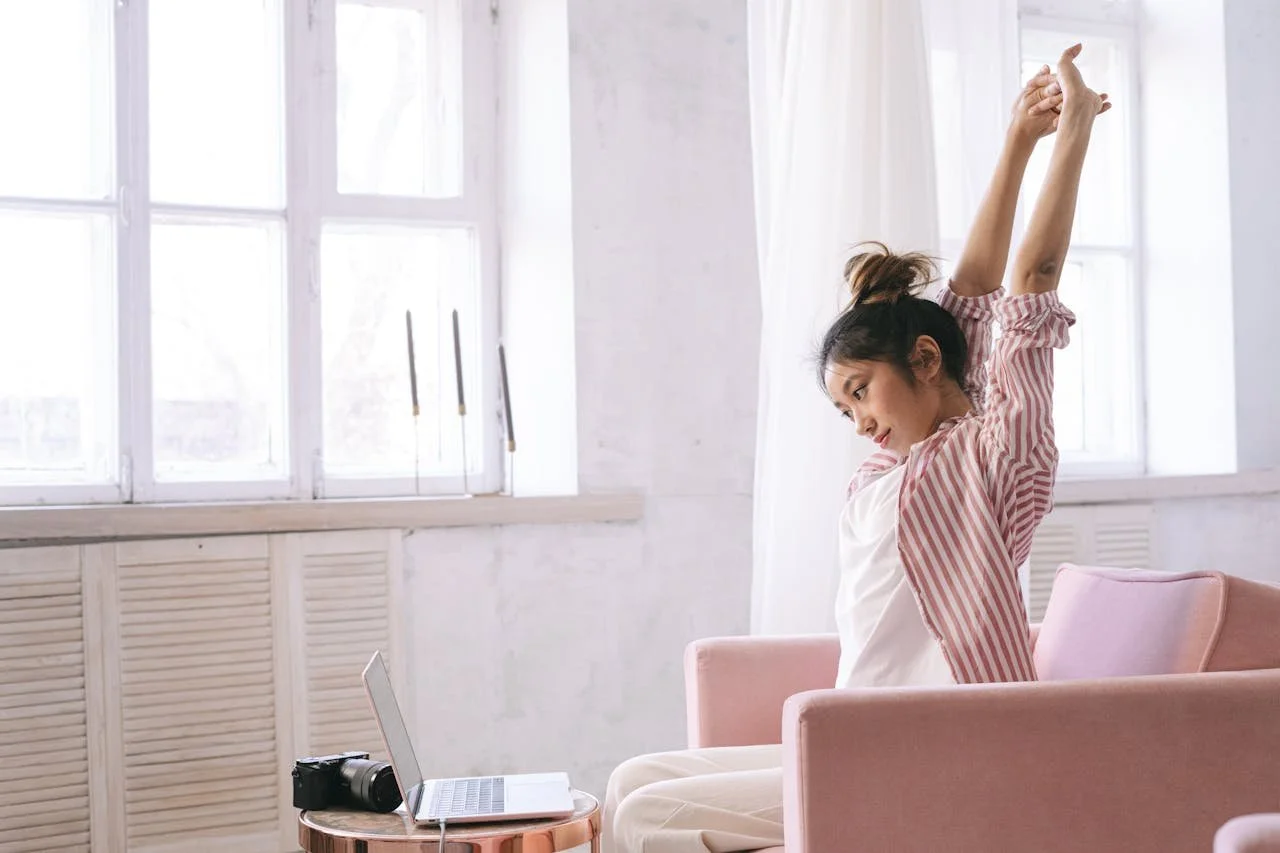
One of the biggest contributors to physical stress today is prolonged stillness.
Hours spent at a desk or staring at screens can keep muscles contracted for long periods. Even small movements can interrupt this cycle and give the nervous system a chance to reset.
Micro-breaks are brief pauses—usually 60 to 90 seconds—taken throughout the day.
During a micro-break, you can:
• Stand up and do gentle stretches
• Look toward a window and focus on distant objects
• Take several deep breaths
• Roll the shoulders slowly backward
These short interruptions signal to the nervous system that it can shift out of a state of constant alertness. Muscles relax slightly, blood flow improves, and the brain receives a brief moment of recovery.
Taking short breaks may actually improve productivity. (Davis, 2022)
4. Segmented Progressive Muscle Relaxation Approach
Stress often hides in muscles we don’t realize we’re tensing.
Progressive muscle relaxation is a technique that builds awareness of those hidden tension patterns.
The process is simple:
• Begin at the feet.
• Gently tense the muscles for about five seconds.
• Release completely and notice the difference.
Gradually, sequentially work upward through the body—calves, thighs, abdomen, shoulders, and neck.
When you intentionally tighten and release muscle groups, the brain begins to recognize what relaxation actually feels like.
For individuals who experience frequent neck tension or headaches, this practice can be particularly helpful because it teaches the body how to release subtle muscle contractions before they become painful. (Lu et al., 2024)
5. Nature-Based Relaxation

Sometimes the most effective stress relief is simply stepping outside.
Research has shown that cortisol levels can be lowered when spending time in natural environments, thus reducing blood pressure and improving mood. Even brief exposure to green spaces appears to calm the nervous system. (The effect of exposure to the natural environment on stress reduction: A meta-analysis, 2021)
Nature also encourages movement.
Walking through a park, tending a garden, or spending time near water naturally engages the spine's muscles through gentle motion. This type of movement helps prevent the stiffness that often accompanies stress.
For people who spend most of the day indoors or in front of screens, even ten minutes outside can create noticeable changes in how the body feels.
When Relaxation Alone Isn’t Enough
Many people explore relaxation techniques only to find that tension returns quickly.
They might meditate regularly, stretch every morning, or try breathing exercises before bed. These practices may provide temporary relief, yet headaches, neck tightness, or fatigue persist.
One reason for this pattern may be structural stress within the spine itself.
When the upper cervical vertebrae are misaligned, surrounding muscles often tighten in an effort to stabilize the area. The nervous system may also work harder to compensate for altered communication between the brain and body.
In these situations, relaxation techniques can feel like trying to calm a system that is already working against a physical imbalance.
This is where upper cervical chiropractic care can play an important role.
Rather than forcing joints into motion, upper cervical care focuses on precise, gentle adjustments designed to restore proper alignment of the atlas and axis vertebrae.
When alignment improves, the nervous system often functions more efficiently, and the body may find it easier to relax naturally.
How Upper Cervical Care Supports Stress Recovery

Man feeling de-stressed.
Upper cervical chiropractic care is based on the idea that the body functions best when the spine is balanced, and the nervous system can communicate clearly.
Because the brainstem passes through the upper cervical region, even small misalignments in this area may influence how the nervous system regulates muscle tone, balance, and stress responses.
Dr. Larry Burks uses careful evaluation techniques to determine whether the upper cervical spine is properly aligned. If misalignment is present, gentle adjustments may help restore balance to the area.
Patients frequently report improvements that extend beyond simple neck comfort.
Some notice fewer headaches.
Others experience deeper sleep.
Many describe a general sense of calm that is difficult to explain but easy to feel.
This does not mean chiropractic care eliminates stress from life. Rather, it helps the body respond to stress in a healthier way.
When the nervous system is functioning clearly, relaxation techniques often become more effective because the body is no longer compensating for structural strain.
Building a Simple Daily Stress-Relief Routine
Stress management does not require dramatic lifestyle changes. Often, the most meaningful improvements come from small habits practiced consistently.
A simple routine might look something like this:
Morning
Begin the day with three minutes of diaphragmatic breathing and a brief wall alignment reset. These practices encourage the body to start the day in a balanced posture.
Midday
Take a micro-break every hour or every two hours. Stand, stretch, and let your eyes focus on something distant rather than a screen.
Evening
Use progressive muscle relaxation to release the tension accumulated throughout the day.
Weekly
Pay attention to how the neck and shoulders feel. If discomfort persists or headaches become frequent, consider having your spinal alignment evaluated.
Consistency matters more than perfection. Even a few minutes of relaxation each day can help the nervous system recover from the demands of modern life.
A Final Thought on Stress and the Spine
Stress will always be part of life. The goal is not to eliminate it completely but to give the body the tools it needs to recover.
Relaxation techniques can often calm the nervous system and release muscle tension. Healthy posture reduces mechanical strain on the spine. And proper alignment—especially in the upper cervical region—supports clear communication between the brain and body.
When these elements work together, the body becomes far more capable of adapting to daily challenges.
If you’ve been experiencing persistent neck tension, headaches, or stress-related discomfort, it may be worth exploring whether spinal alignment is contributing.
Dr. Larry Burks and the team at The Upper Cervical Clinic are committed to helping patients restore balance to the nervous system through precise, gentle care.
Sometimes the first step toward feeling calmer is simply allowing the body to function the way it was designed to.