
Chronic Stress, Cortisol, and the Physical Toll on Your Spine and Muscles
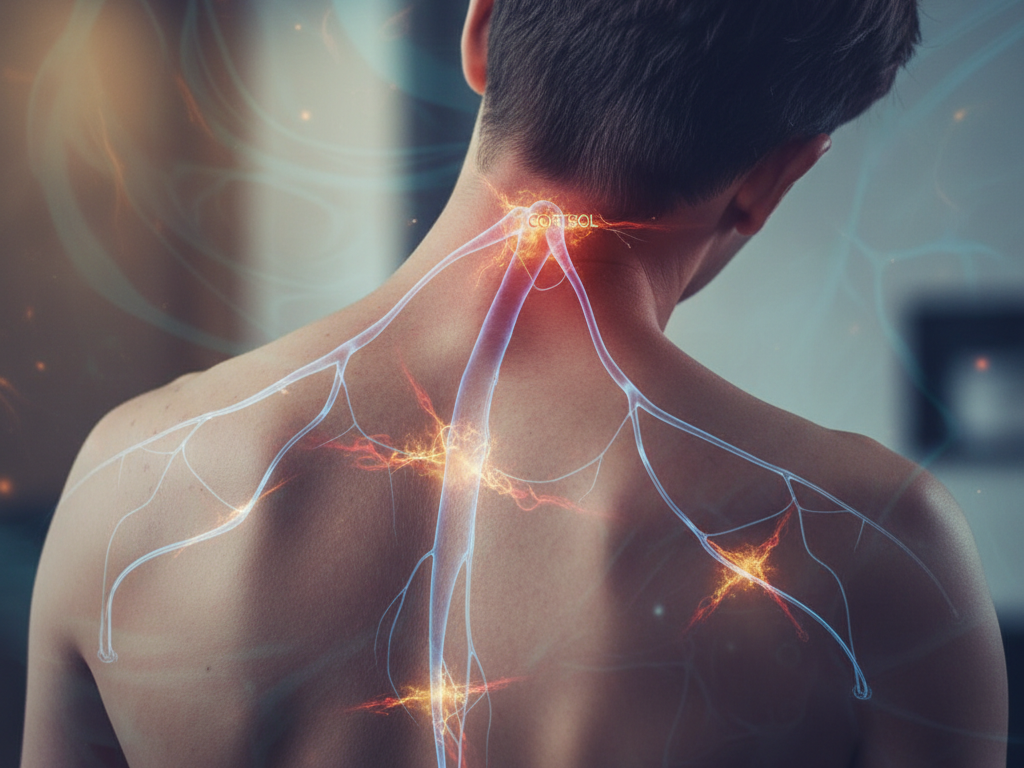
You have felt it building for months, maybe years. The tension between your shoulder blades that never fully releases. The persistent ache at the base of your skull. The stiffness that greets you every morning, regardless of how many hours you spent in bed. You tell yourself it is just stress, and you are not wrong, but what you might not realize is that chronic stress and back pain are connected through a precise, measurable physiological pathway that reshapes your muscles, your posture, and the alignment of your spine.
Stress is not merely an emotional experience. When stress becomes chronic, it triggers a cascade of biochemical responses that physically alter the tissues, joints, and nervous system structures throughout your body. The persistent elevation of cortisol, your body's primary stress hormone, creates an environment where muscles remain contracted, inflammation lingers, and the nervous system stays locked in a heightened state of vigilance. Over time, this biochemical reality translates into the very real physical pain that disrupts your sleep, limits your activity, and diminishes your quality of life.
Understanding the physical mechanisms behind stress-related pain is not an academic exercise. It is the first step toward breaking a cycle that conventional approaches often miss entirely, and it opens the door to structural solutions that address the root cause rather than simply managing symptoms.
What Chronic Stress Does to Your Body Beyond Just Feeling Overwhelmed
When you encounter a stressor, whether it is a looming deadline, a difficult conversation, or an unexpected financial challenge, your body initiates what is known as the stress response. Your adrenal glands release cortisol and adrenaline, your heart rate increases, your muscles tense in preparation for action, and non-essential functions like digestion slow down. This response, often called the fight-or-flight mechanism, is designed to be temporary. It equips you to respond to immediate threats and then return to baseline once the danger has passed.
Chronic stress disrupts this natural rhythm. Instead of returning to a state of rest and recovery, your body remains in a prolonged state of activation. According to research published by the American Psychological Association, approximately 77 percent of adults regularly experience physical symptoms caused by stress, with muscle tension ranking among the most common complaints. When the stress response remains engaged day after day, the biochemical changes that were meant to protect you begin to harm you instead.
Cortisol levels that remain elevated over weeks or months interfere with tissue repair, suppress immune function, and increase systemic inflammation. Muscles that are designed to contract briefly and then relax stay partially contracted for extended periods, creating a state of chronic tension. Blood flow to certain areas decreases, depriving tissues of the oxygen and nutrients they need to heal. The nervous system, which governs every function in your body, becomes hypersensitized, interpreting even minor stimuli as potential threats.
This is not a vague feeling of being stressed out. This is a measurable, structural change in how your body functions, and it lays the groundwork for the physical pain that follows.
The Cortisol Connection: How Prolonged Stress Hormones Affect Muscle and Tissue
Cortisol is often called the stress hormone, but its role in the body is far more complex than that label suggests. Under normal circumstances, cortisol helps regulate metabolism, control inflammation, and manage your sleep and wake cycles. It is released in a natural rhythm, with levels peaking in the early morning to help you wake up and gradually declining throughout the day to prepare you for rest.
Chronic stress disrupts this rhythm entirely. When your body perceives ongoing threat or demand, cortisol production becomes dysregulated. Levels may remain elevated throughout the day and night, or the natural peak and decline pattern may flatten, leaving you feeling wired yet exhausted at the same time. This persistent elevation of cortisol creates a cascade of effects on your muscles and connective tissues.
Cortisol directly influences muscle tension by affecting the way your nervous system communicates with muscle fibers. Elevated cortisol increases the sensitivity of muscle spindles, the sensory receptors that detect changes in muscle length and trigger protective contractions. When these receptors become hypersensitive, your muscles contract more readily and release more slowly, creating a state of persistent tension that you feel as tightness, stiffness, or pain.
Prolonged cortisol exposure also interferes with protein synthesis and tissue repair. Muscles that are constantly contracting develop microscopic damage that would normally be repaired during rest and recovery. When cortisol levels remain high, this repair process is suppressed, and the cumulative damage manifests as chronic soreness, reduced flexibility, and increased vulnerability to injury.
Additionally, cortisol promotes the breakdown of collagen, the structural protein that provides strength and elasticity to connective tissues including ligaments, tendons, and the discs between your vertebrae. Over time, this degradation weakens the supportive structures of your spine, making it more susceptible to misalignment and injury. Research from the International Chiropractors Association has documented the relationship between prolonged stress exposure and increased rates of musculoskeletal complaints, particularly in the cervical and thoracic regions of the spine.
Why Stress Shows Up as Neck Pain, Shoulder Tension, and Headaches
The physical manifestations of chronic stress are not random. They follow predictable patterns that reflect the way your nervous system prioritizes protection and the areas of your body that are most vulnerable to tension-related dysfunction.
The muscles of your neck, shoulders, and upper back are particularly susceptible to stress-related tension because they are intimately connected to your postural system and your breathing mechanics. When stress triggers the fight-or-flight response, your body instinctively adopts a protective posture. Your shoulders elevate, your head shifts forward, and the muscles at the base of your skull and along the sides of your neck contract to brace against perceived threat.
This postural shift places enormous strain on the upper cervical spine, the region where your skull meets the top two vertebrae of your neck. The atlas, or C1 vertebra, and the axis, or C2 vertebra, are the most mobile and least stable segments of your entire spine. They are designed to allow your head to turn, tilt, and nod freely, but this mobility comes at the cost of structural stability. When the muscles surrounding these vertebrae remain chronically tight, they pull the delicate alignment of the upper cervical spine out of balance.
Misalignment in the upper cervical spine has far-reaching consequences. The brainstem, which controls fundamental functions like heart rate, blood pressure, and pain perception, passes through the opening in the atlas vertebra. Any interference or compression in this area can disrupt the flow of neural signals between your brain and the rest of your body, amplifying pain signals and perpetuating the stress response.
Tension headaches and migraines are common downstream effects of this dysfunction. When the suboccipital muscles, the small but powerful muscles at the base of your skull, remain contracted for extended periods, they compress the nerves and blood vessels that supply your head and face. This compression can trigger referred pain that radiates across your scalp, behind your eyes, or into your jaw, creating the characteristic pattern of a tension headache or migraine.
Similarly, chronic tension in the trapezius and levator scapulae muscles, which connect your neck to your shoulders, creates a persistent ache that many people describe as carrying the weight of the world on their shoulders. This is not merely a metaphor. It is a literal description of the way your body holds stress in physical form.
The Feedback Loop: How Physical Pain Increases Stress and Vice Versa
One of the most challenging aspects of chronic stress and back pain is the feedback loop that develops between physical discomfort and emotional strain. Pain is itself a stressor, and when pain becomes chronic, it perpetuates the very biochemical responses that caused it in the first place.
When you experience pain, your nervous system releases stress hormones as part of its protective response. This is adaptive in the short term, as it helps you withdraw from harmful stimuli and focus on recovery. However, when pain persists day after day, this protective response becomes maladaptive. Your cortisol levels remain elevated, your muscles stay tense, and your nervous system becomes increasingly sensitized to pain signals.
This process, known as central sensitization, occurs when your central nervous system becomes hyperresponsive to stimuli. Pain signals that would normally be perceived as mild discomfort are amplified, creating a heightened experience of pain that is disproportionate to the actual tissue damage. Research from the American Chiropractic Association indicates that central sensitization plays a significant role in the transition from acute to chronic pain, and that addressing nervous system function is a critical component of breaking this cycle.
The emotional toll of living with chronic pain further reinforces the feedback loop. Pain disrupts sleep, limits your ability to engage in activities you enjoy, and creates frustration, anxiety, or depression. These emotional responses trigger additional cortisol release, which perpetuates muscle tension and inflammation, which generates more pain. Without intervention, this cycle becomes self-sustaining, and the physical and emotional components of stress become inseparable.
Upper Cervical Misalignment and the Stress Response: What the Research Tells Us
The relationship between upper cervical spine alignment and nervous system function is a cornerstone of upper cervical chiropractic care, and it is supported by a growing body of research that documents the profound effects of even subtle misalignments in this region.
The upper cervical spine houses the brainstem, the control center for autonomic functions that regulate your stress response. When the atlas or axis vertebrae shift out of alignment, even by a few millimeters, they can create mechanical pressure or tension on the surrounding neural tissues. This interference disrupts the normal flow of information between your brain and body, leading to dysregulation of the autonomic nervous system.
The autonomic nervous system is divided into two branches: the sympathetic nervous system, which governs the fight-or-flight response, and the parasympathetic nervous system, which governs rest, digestion, and recovery. In a healthy, balanced state, these two branches work together to help you respond to challenges and then return to equilibrium. When upper cervical misalignment disrupts this balance, the sympathetic branch can become overactive, keeping you locked in a chronic state of stress even when no immediate threat is present.
Studies conducted by the National Upper Cervical Chiropractic Association have found that correction of upper cervical misalignment can lead to measurable improvements in autonomic function, including reductions in blood pressure, heart rate variability, and subjective reports of stress and anxiety. While these findings do not suggest that upper cervical care is a cure for stress-related conditions, they do indicate that restoring proper alignment in this critical region can support the nervous system in returning to a more balanced state.
Recognizing the Physical Signs That Stress Has Become Chronic
Chronic stress does not announce itself with a single dramatic event. It accumulates quietly over time, and the physical signs often appear gradually enough that you may not recognize them as connected to stress until they have become persistent and debilitating.
One of the earliest signs is a change in your baseline muscle tension. You may notice that your shoulders feel perpetually tight, that you clench your jaw during the day or grind your teeth at night, or that the muscles along the back of your neck feel knotted and sore. These sensations are not incidental. They are your body's way of signaling that the stress response has been active for too long.
Sleep disturbances are another common indicator. Elevated cortisol levels interfere with the natural sleep-wake cycle, making it difficult to fall asleep, stay asleep, or wake feeling rested. You may find that your mind races at night, that you wake frequently, or that you feel exhausted even after a full night in bed. Poor sleep, in turn, impairs your body's ability to repair tissues and regulate cortisol, perpetuating the cycle.
Digestive issues, including bloating, constipation, or changes in appetite, are also common physical manifestations of chronic stress. The same nervous system dysregulation that creates muscle tension also affects the function of your digestive organs, as the parasympathetic branch responsible for digestion becomes suppressed.
Changes in posture are particularly telling. Chronic stress often leads to a forward head posture, rounded shoulders, and a flattening of the natural curves of the spine. These postural adaptations create additional mechanical strain on the upper cervical spine and surrounding musculature, compounding the effects of stress on your physical structure.
If you are experiencing several of these signs simultaneously, and if they have persisted for weeks or months despite your best efforts to manage stress through lifestyle changes alone, it may be time to consider whether a structural component is contributing to your symptoms.
Practical Strategies to Lower Cortisol and Support Your Nervous System
Breaking the cycle of chronic stress and physical pain requires a multifaceted approach that addresses both the biochemical and structural components of the problem. While professional care may be necessary to correct underlying spinal misalignment, there are evidence-based strategies you can implement in your daily life to lower cortisol levels and support nervous system balance.
Prioritizing sleep is one of the most powerful interventions you can make. Establishing a consistent sleep schedule, creating a dark and cool sleep environment, and limiting screen time in the hours before bed can help restore the natural cortisol rhythm that chronic stress has disrupted. Research consistently shows that even modest improvements in sleep quality can lead to measurable reductions in cortisol levels and improvements in pain perception.
Movement is equally important, but the type of movement matters. While intense exercise can temporarily elevate cortisol, moderate and rhythmic activities like walking, swimming, or yoga can help discharge accumulated tension and promote parasympathetic activation. Gentle stretching of the neck, shoulders, and upper back, performed slowly and with attention to your breath, can release muscle tension and improve circulation to stressed tissues.
Breathwork is a direct and accessible tool for influencing your autonomic nervous system. Slow, diaphragmatic breathing, in which you breathe deeply into your belly rather than shallowly into your chest, sends a signal to your brainstem that it is safe to shift out of fight-or-flight mode. Practicing this type of breathing for just five to ten minutes per day can create meaningful changes in nervous system tone over time.
Mindfulness practices, including meditation, progressive muscle relaxation, or body scan exercises, help you develop awareness of where you are holding tension and create opportunities for conscious release. These practices do not eliminate stressors from your life, but they can change the way your nervous system responds to them.
Nutritional support also plays a role. Diets high in refined sugars and processed foods can exacerbate inflammation and cortisol dysregulation, while whole foods rich in omega-3 fatty acids, magnesium, and B vitamins support healthy nervous system function and stress resilience.
When to Seek Structural Support: How Upper Cervical Care Can Break the Cycle
Lifestyle strategies are valuable and necessary, but they are not always sufficient when a structural misalignment in the upper cervical spine is perpetuating nervous system dysfunction. If you have been managing stress through diet, exercise, and relaxation techniques but still experience persistent neck pain, headaches, or muscle tension, it may be time to explore whether a structural issue is contributing to your symptoms.
Upper cervical chiropractic care, as practiced at The Upper Cervical Clinic in Portland, Oregon, is specifically designed to address misalignments in the atlas and axis vertebrae that interfere with brainstem function and autonomic balance. Unlike general chiropractic manipulation, upper cervical care is precise, measured, and non-invasive. Techniques such as NUCCA (National Upper Cervical Chiropractic Association) and KCUCS use gentle force and precise vector analysis to restore alignment without forceful cracking or twisting.
The process begins with a comprehensive assessment that includes a detailed health history, thermal scanning to detect nerve interference, and diagnostic imaging when appropriate. Dr. Larry Burks evaluates the exact degree and direction of any misalignment and develops a personalized care plan tailored to your unique anatomy and health goals. Many patients with stress-related symptoms find that as upper cervical alignment is restored, the body's natural ability to regulate the stress response improves, muscle tension decreases, and pain begins to resolve.
Upper cervical care does not replace stress management practices. It complements them. By removing structural interference from the nervous system, it creates the foundation your body needs to respond more effectively to the strategies you are already using, whether that is improved sleep, mindful movement, or breathwork.
If chronic stress has taken a physical toll on your body, and if you are ready to explore a solution that addresses structure rather than simply managing symptoms, The Upper Cervical Clinic offers a free 15-minute consultation to discuss your history, answer your questions, and determine whether upper cervical care may be a good fit for your needs. You do not have to continue carrying the weight of stress in your neck, shoulders, and spine. Relief is possible, and it begins with understanding the connection between what you feel and what is happening structurally in your body.
Frequently Asked Questions
Can stress cause physical back pain?
Yes, chronic stress triggers elevated cortisol levels that keep muscles contracted, increase inflammation, and suppress tissue repair. This biochemical cascade creates measurable physical changes in your spine and muscles, resulting in real structural pain, not just tension you can ignore.
How does cortisol affect your muscles and spine?
Cortisol increases muscle spindle sensitivity, causing muscles to contract more easily and release more slowly. It also breaks down collagen in spinal discs and connective tissues while suppressing the protein synthesis needed for repair, weakening your spine's supportive structures over time.
Why does stress always cause neck and shoulder pain?
Your nervous system responds to perceived threats by tensing muscles in predictable protective patterns, with the neck and shoulders being primary areas. These regions bear postural load and contain dense nerve networks, making them especially vulnerable to stress-related tension and pain.
What is the difference between stress and chronic stress on the body?
Acute stress triggers a temporary fight-or-flight response that resolves when the threat passes. Chronic stress keeps your body in prolonged activation, preventing recovery, maintaining elevated cortisol, sustaining muscle contraction, and creating lasting structural changes that damage tissues.
Can chronic stress cause permanent damage to your spine?
Prolonged cortisol elevation degrades collagen in spinal discs and ligaments, weakens supportive structures, and creates chronic muscle imbalances that alter spinal alignment. Without intervention addressing the root cause, these changes can lead to lasting structural issues and increased injury vulnerability.