
The Role of Hydration in Spinal Disc Health and Daily Energy
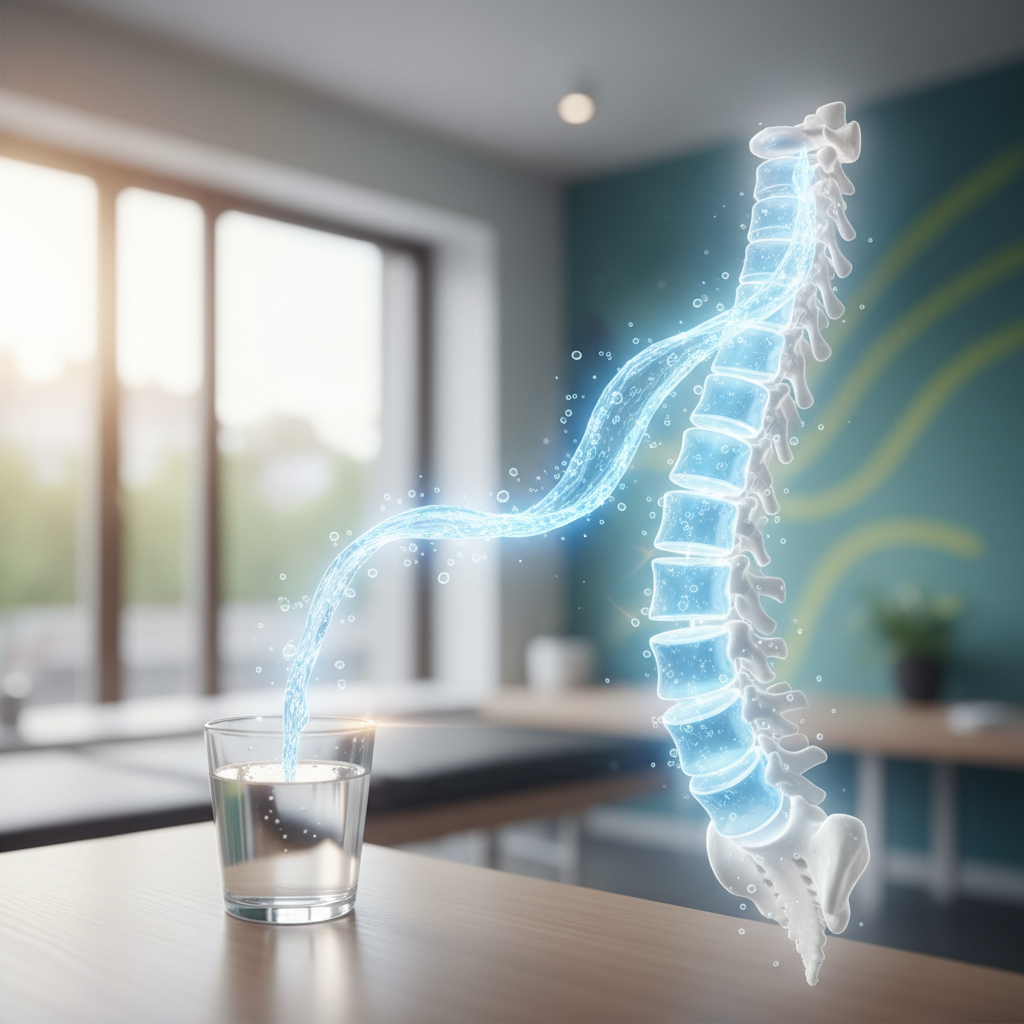
You likely know that water is important for overall health, but have you ever considered how hydration directly affects the structural integrity of your spine? Many people experience persistent lower back pain, stiffness, and unexplained fatigue without recognizing that their hydration habits may be contributing to the problem. The connection between hydration and spine health goes far beyond general wellness advice. Your spinal discs are living tissues that depend on adequate fluid intake to maintain their cushioning properties and protect the delicate nervous system pathways running through your vertebrae.
At The Upper Cervical Clinic in Portland, Dr. Larry Burks consistently observes how patients who address their hydration habits alongside upper cervical care experience more sustained improvements in both spinal function and daily energy levels. This is not coincidental. The relationship between proper water intake and spinal disc integrity is rooted in basic anatomy and physiology, and understanding this connection can change how you approach both prevention and recovery.
How Spinal Discs Absorb and Lose Water Throughout the Day
Your spinal discs are not solid structures. Each disc is composed of two distinct parts: the annulus fibrosus, a tough outer ring of fibrous tissue, and the nucleus pulposus, a gel-like inner core that acts as a hydraulic shock absorber. The nucleus pulposus is approximately 80 percent water in healthy young adults, though this percentage naturally decreases with age. This high water content is what allows your discs to compress and expand in response to the forces placed on your spine during movement.
Throughout the day, as you stand, sit, walk, and lift objects, gravity and mechanical compression squeeze water out of your discs in a process similar to wringing out a sponge. Research published in the Journal of Anatomy indicates that spinal discs can lose up to 20 percent of their fluid content during waking hours due to these compressive forces. This fluid loss reduces disc height temporarily, which is why you may be slightly shorter at the end of the day compared to when you wake up.
The body is designed to restore this lost fluid during rest, particularly when you lie down and remove gravitational load from the spine. During sleep, your discs rehydrate by drawing water from surrounding tissues through a process called imbibition. However, this recovery process depends entirely on having adequate systemic hydration. If your body does not have enough fluid available, your discs cannot fully rehydrate overnight, and the cycle begins again the next day with your discs already starting at a deficit.
The Link Between Dehydration and Disc Compression
When your discs cannot maintain proper hydration, they lose their ability to effectively absorb and distribute mechanical loads. A dehydrated disc becomes thinner, stiffer, and less capable of cushioning the vertebrae above and below it. This structural compromise has direct consequences for your spine and nervous system.
Disc compression due to inadequate hydration can lead to several cascading problems. First, reduced disc height alters the spacing between vertebrae, which can narrow the openings where spinal nerves exit the spinal column. This phenomenon, known as foraminal stenosis, can result in nerve irritation, radiating pain, numbness, or weakness in the extremities. Second, a dehydrated disc places increased stress on the surrounding spinal structures, including the facet joints, ligaments, and paraspinal muscles, all of which must work harder to stabilize the spine when the discs are not performing optimally.
The National Upper Cervical Chiropractic Association (NUCCA) emphasizes the importance of addressing lifestyle factors that affect spinal structure, and spinal disc hydration is consistently identified as a foundational element. Patients who maintain proper hydration often experience better outcomes with upper cervical adjustments because their spinal tissues are more responsive to correction and better able to maintain alignment once achieved.
Why Chronic Low-Grade Dehydration Affects Nervous System Function
Your nervous system is the master controller of every function in your body, and it depends on an optimal internal environment to transmit signals efficiently. Chronic low-grade dehydration, the kind that develops slowly over days or weeks without obvious symptoms like extreme thirst, can have subtle but significant effects on nervous system performance.
Water is essential for the production and flow of cerebrospinal fluid, the clear liquid that surrounds your brain and spinal cord. Cerebrospinal fluid acts as a protective cushion, a waste removal system, and a transport medium for nutrients. When you are inadequately hydrated, cerebrospinal fluid production can decrease, potentially affecting the protection and nourishment of neural tissues.
Additionally, dehydration affects the balance of electrolytes such as sodium, potassium, and magnesium, all of which are necessary for proper nerve signal transmission. Even mild electrolyte imbalances can result in symptoms such as brain fog, difficulty concentrating, mood changes, and reduced coordination. Many patients attribute these symptoms to stress, aging, or poor sleep without considering that inadequate water intake for back pain prevention and nervous system support may be a contributing factor.
At The Upper Cervical Clinic, we understand that upper cervical misalignments can interfere with brainstem function and nervous system communication. However, the most precise spinal correction will be limited in its effectiveness if the tissues and fluids that support nervous system health are compromised by chronic dehydration.
Hydration and Inflammation: What Happens When Tissues Are Dry
Inflammation is a natural immune response, but chronic inflammation can damage tissues and delay healing. One often overlooked contributor to persistent inflammation is inadequate hydration. When your body lacks sufficient water, it struggles to flush metabolic waste products and inflammatory markers from tissues effectively.
Spinal discs have a very limited blood supply, especially in the inner nucleus pulposus. Instead of receiving nutrients and removing waste through direct blood flow as most tissues do, discs rely on diffusion, a passive process where water and nutrients move in and waste products move out based on concentration gradients. This process is entirely dependent on adequate hydration. When you are dehydrated, the diffusion process slows, and waste products such as lactic acid and inflammatory cytokines can accumulate within the disc, contributing to degeneration and pain.
Research published in the journal Spine suggests that chronic inflammation within spinal discs is a key factor in the development of degenerative disc disease, a condition characterized by disc thinning, loss of elasticity, and persistent pain. While many factors contribute to disc degeneration, including age, genetics, and mechanical stress, maintaining proper hydration is one of the most accessible and controllable variables for supporting disc health and reducing inflammation.
Patients at The Upper Cervical Clinic who commit to consistent hydration alongside their care plan often report not only reduced back and neck pain but also improvements in related symptoms such as joint stiffness, headaches, and general fatigue. These outcomes reflect the systemic nature of hydration; it benefits the entire musculoskeletal and nervous systems, not just isolated areas.
How Much Water Your Body Actually Needs for Spinal Support
General hydration guidelines often recommend eight glasses of water per day, but this advice does not account for individual differences in body size, activity level, climate, and overall health. For spinal health specifically, the goal is to maintain consistent hydration throughout the day rather than consuming large amounts of water sporadically.
A more personalized approach is to aim for approximately half your body weight in ounces of water daily. For example, a person weighing 160 pounds would target around 80 ounces of water per day. This baseline should be adjusted upward if you exercise regularly, live in a hot or dry climate, consume caffeinated beverages, or take medications that have diuretic effects.
Timing also matters. Drinking water steadily throughout the day supports continuous tissue hydration and helps your body maintain the fluid balance necessary for disc imbibition overnight. Consuming most of your water in one or two large doses is less effective because your kidneys will excrete the excess before your tissues can absorb it.
It is also important to recognize that hydration is not solely about water intake. Your body needs electrolytes to properly absorb and utilize the water you drink. Including foods rich in potassium, such as bananas, sweet potatoes, and leafy greens, and ensuring adequate sodium intake, particularly if you sweat heavily during exercise, can enhance your body's ability to maintain optimal hydration at the cellular level.
Dr. Burks often advises patients that nervous system hydration is a daily practice, not a one-time fix. Just as upper cervical care requires consistency and commitment, so does maintaining the internal environment that allows your spine and nervous system to function at their best.
Signs Your Spine May Be Dehydrated
Because hydration affects so many bodily systems, the signs that your spine specifically is suffering from inadequate fluid intake can be subtle and easy to overlook. However, certain patterns of discomfort and dysfunction often point to dehydration as a contributing factor.
One of the earliest and most common indicators is stiffness, particularly in the morning. While some morning stiffness is normal as your body transitions from rest to activity, prolonged or severe stiffness may suggest that your spinal discs did not fully rehydrate overnight. This can be a sign that your baseline hydration is insufficient.
Another indicator is increased pain or discomfort later in the day. If you notice that your back or neck pain worsens as the day progresses, it may be related to progressive disc compression that occurs when your discs are not adequately hydrated to handle the mechanical demands placed on them.
Frequent muscle spasms or cramps, especially in the back or neck, can also signal dehydration. Muscles that surround the spine often tighten in response to instability or irritation in the spinal joints, and dehydration exacerbates muscle tension by impairing electrolyte balance and reducing circulation to soft tissues.
Headaches, particularly those that begin at the base of the skull or radiate from the neck, can be linked to both spinal misalignment and dehydration. The upper cervical spine is intimately connected to the brainstem and surrounding neural structures, and when discs in the cervical region lose hydration, it can contribute to tension headaches or exacerbate migraines.
Finally, generalized fatigue that does not improve with rest may be related to poor hydration, affecting both spinal health and overall nervous system function. When your body is constantly working to compensate for dehydrated tissues and suboptimal nerve communication, energy levels decline even in the absence of significant physical exertion.
Pairing Hydration With Upper Cervical Care for Optimal Recovery
Upper cervical chiropractic care, particularly the NUCCA protocol used at The Upper Cervical Clinic, is designed to restore proper alignment to the atlas and axis vertebrae, removing interference from the brainstem and allowing the nervous system to function without obstruction. This precise, gentle correction can have profound effects on pain, mobility, and overall health. However, the body's ability to maintain that correction and heal damaged tissues depends on having the right internal conditions, and hydration is a cornerstone of that environment.
When you are properly hydrated, your spinal discs maintain their height and cushioning ability, reducing the mechanical stress that can pull vertebrae out of alignment. Your muscles and ligaments remain pliable and responsive, allowing them to support the corrected spinal structure more effectively. Your nervous system operates with greater efficiency, transmitting signals clearly and coordinating healing processes throughout the body.
Patients who combine consistent hydration with upper cervical care often notice that their adjustments hold longer, meaning they require fewer follow-up visits to maintain alignment. They also tend to experience faster resolution of symptoms and greater improvements in secondary conditions such as sleep quality, digestion, and immune function, all of which are influenced by nervous system health.
Dr. Burks encourages every patient to view hydration as an active component of their care plan, not a passive afterthought. Simple strategies such as carrying a reusable water bottle, setting reminders to drink throughout the day, and paying attention to thirst cues can make a measurable difference in both short-term comfort and long-term spinal health.
If you have been managing chronic neck pain, lower back discomfort, or persistent fatigue without considering how your hydration habits may be affecting your spine, it may be time to explore a more comprehensive approach. At The Upper Cervical Clinic, we provide thorough assessments that consider not only spinal alignment but also the lifestyle factors that support or hinder your body's ability to heal. Addressing disc degeneration prevention through proper hydration is one of the simplest and most powerful steps you can take.
We invite you to schedule a free 15-minute consultation with Dr. Larry Burks to discuss your symptoms, learn more about how upper cervical care works, and discover whether this approach might be the missing piece in your journey toward lasting relief and better health.
Frequently Asked Questions
How much water should I drink for spinal disc health?
Adults should aim for 8-10 glasses of water daily to maintain optimal spinal disc hydration. Your discs are 80% water and need consistent fluid intake to function as effective shock absorbers between vertebrae.
Can dehydration cause lower back pain?
Yes, dehydration can directly cause lower back pain by reducing spinal disc height and cushioning ability. When discs lose water content, they compress and place extra stress on surrounding nerves and spinal structures.
Do spinal discs rehydrate while sleeping?
Spinal discs naturally rehydrate during sleep through a process called imbibition when gravitational pressure is removed. However, this recovery process only works effectively if your body has adequate overall hydration levels.
What is the connection between hydration and spine health?
Proper hydration maintains spinal disc structure and nervous system function. Dehydrated discs lose their shock-absorbing properties, can compress nerves, and affect cerebrospinal fluid production that protects your brain and spinal cord.
Why do spinal discs lose water during the day?
Gravity and mechanical compression from standing, sitting, and movement squeeze water out of spinal discs like wringing a sponge. Research shows discs can lose up to 20% of their fluid content during waking hours.