
Shoulder and Neck Tension: What's Actually Going On and How to Fix It
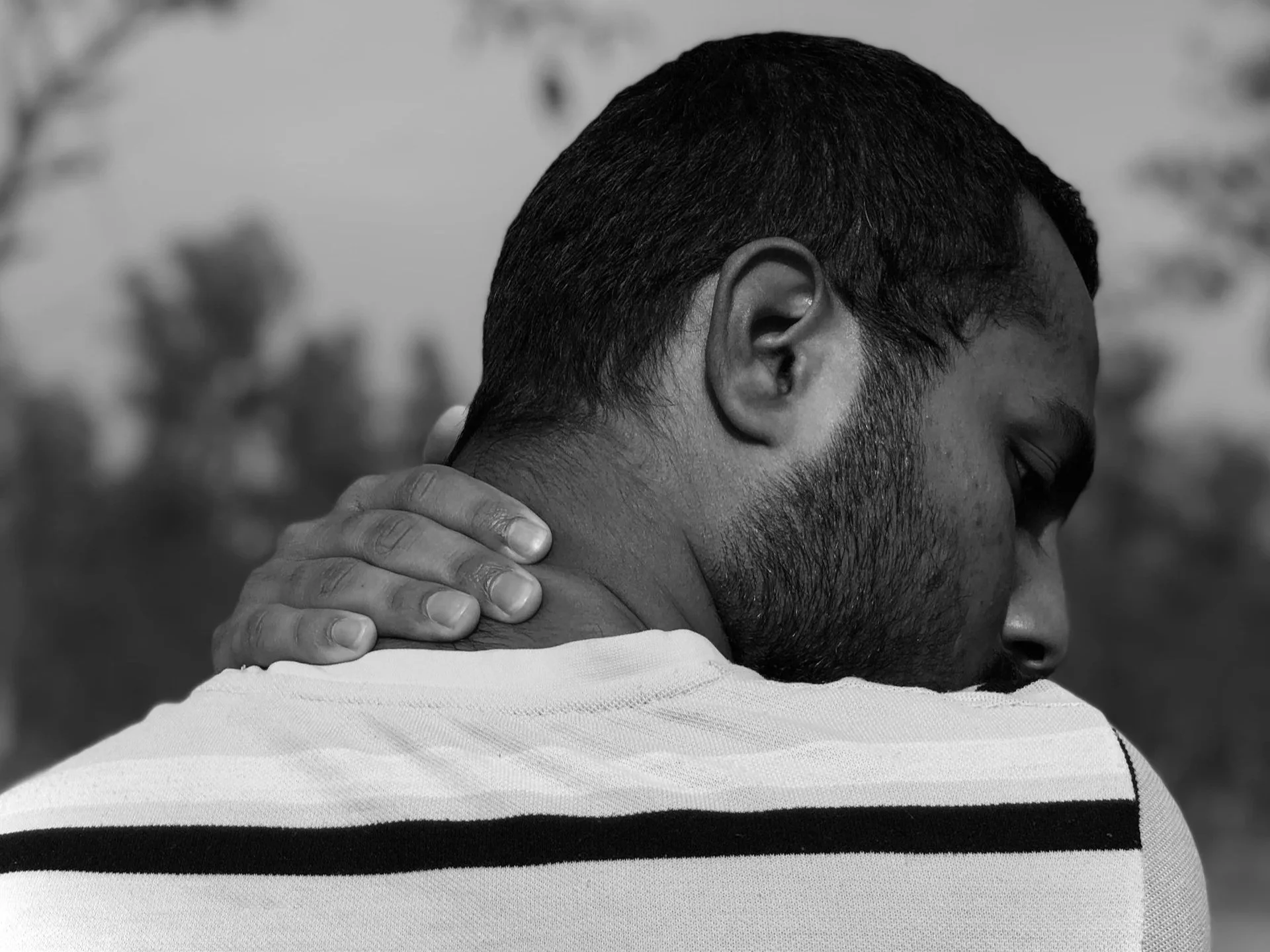
You wake up with stiff shoulders. By midday, there is a knot the size of a golf ball between your shoulder blade and spine. You stretch at your desk, roll your neck in slow circles, and press your fingers into the tight spots until they ache. The relief lasts maybe ten minutes. Then the tension creeps back in, settling into the same familiar places it always does. This is not a new problem. It has been happening for months, maybe years. You have tried massage, foam rolling, heat packs, and every YouTube stretch routine you can find. Nothing sticks. The tightness keeps returning, and you are starting to wonder if this is just how your body works now.
What most people do not realize is that chronic neck and shoulder tension is rarely a muscle problem. It is a nervous system problem. The muscles are responding to something deeper, a signal from the spine that tells them to guard, brace, and protect. When that signal originates from a misalignment in the upper cervical spine, no amount of stretching or rubbing will fix it. The tension will keep coming back because the root cause remains untouched.
This post will walk you through the anatomy behind neck and shoulder tension, explain why certain muscles get tight and stay tight, and show you what actually needs to happen for lasting relief. We will cover practical self-care strategies that support your nervous system, and we will also explain when it is time to address the structural issues that stretching cannot reach.
Why Shoulder and Neck Tension Often Travel Together
The muscles of your neck and shoulders are not separate systems. They share nerve pathways, fascia, and overlapping attachment points along the cervical spine, upper ribs, and scapula. When one area becomes tense, the surrounding muscles compensate, and tension spreads. This is why you might start with a stiff neck and end the day with a shoulder that feels locked in place.
The trapezius muscle is the primary player here. It runs from the base of your skull, across the top of your shoulders, and down to the mid-back. The upper portion, known as the upper trapezius, is particularly prone to overuse. It elevates your shoulder blades and helps support the weight of your head. When your head is out of alignment, or your posture shifts forward, the upper trapezius has to work overtime. It never fully relaxes, even when you are sitting still.
The levator scapulae is another key muscle. It connects the upper cervical vertebrae to the top corner of your shoulder blade. When this muscle tightens, it pulls the shoulder blade upward and inward, creating that familiar hunched sensation. Trigger points in the levator scapulae can refer pain into the neck, behind the ear, and even into the angle of the jaw. Many patients describe this as a deep ache that stretching cannot touch.
These muscles do not tighten randomly. They respond to signals from the nervous system, and those signals are heavily influenced by the alignment and movement of the upper cervical spine.
The Role of the Upper Cervical Spine in Muscle Coordination
Your upper cervical spine consists of the atlas, also called C1, and the axis, also called C2. These two vertebrae sit directly beneath your skull and form the most mobile segment of your entire spine. They allow you to nod, turn your head, and tilt your gaze without moving your shoulders. But that mobility comes with a cost. The upper cervical spine is also the most unstable region of the spine, and when it shifts out of alignment, the effects ripple outward.
The brainstem passes through the opening formed by the atlas and the base of the skull. This is where the central nervous system transitions from the brain to the spinal cord. The brainstem controls many of the body's automatic functions, including muscle tone, balance, and posture. When the atlas or axis is misaligned, even by a few millimeters, it can irritate the surrounding nerve tissue and alter the signals being sent to the muscles below.
This phenomenon is called neurological interference. It does not always cause pain at the site of the misalignment. Instead, it shows up as compensatory tension in the muscles that are trying to stabilize your head and neck. The upper trapezius, levator scapulae, sternocleidomastoid, and suboccipital muscles all receive input from the upper cervical nerves. When those nerves are under stress, the muscles respond by tightening. This is not weakness. It is protective guarding.
According to research published by the National Upper Cervical Chiropractic Association, upper cervical misalignments can lead to measurable changes in muscle tone and postural balance. When the alignment is corrected, many patients experience a reduction in muscle guarding within days, not weeks. The nervous system recalibrates, and the muscles no longer need to brace against a structural imbalance.
How Forward Head Posture Overloads the Trapezius and Levator Scapulae
Forward head posture is one of the most common contributors to chronic neck and shoulder tension. It happens when your head drifts forward in relation to your shoulders, often as a result of prolonged sitting, screen time, or postural habits that have developed over the years. For every inch your head moves forward, the effective weight on your neck increases by approximately ten pounds, according to biomechanical studies cited by the American Chiropractic Association.
When your head is aligned directly over your shoulders, the weight is distributed evenly across the cervical spine and supported by deep stabilizing muscles. But when your head shifts forward, the upper trapezius and levator scapulae have to contract constantly just to keep your head from falling further forward. They are not designed for this kind of sustained load. Over time, they become overworked, tight, and painful.
Forward head posture also changes the mechanics of your shoulder blades. Your scapula is meant to glide smoothly along the rib cage, controlled by a coordinated effort between multiple muscle groups. When the upper trapezius is chronically tight, it pulls the shoulder blade upward and rotates it in a way that restricts normal movement. This can lead to shoulder impingement, reduced range of motion, and pain that radiates down the arm.
You might notice that your shoulders feel tight even when you are not doing anything strenuous. You might catch yourself shrugging your shoulders toward your ears without realizing it. These are signs that your nervous system is stuck in a pattern of muscle guarding, often because the alignment of your upper cervical spine has been compromised.
Trigger Points, Nerve Referral, and the Downstream Effects of Misalignment
Trigger points are hyperirritable spots within a tight band of muscle. They develop when muscle fibers contract and do not fully release. Trigger points in the upper trapezius and levator scapulae are extremely common in people with chronic neck and shoulder tension. When pressed, these points can refer pain to other areas of the body, including the temple, behind the eye, the jaw, and down the arm.
Nerve referral is different but related. It occurs when irritation or compression of a nerve causes symptoms in the area that the nerve supplies. For example, irritation of the C2 nerve root can cause pain that travels up the back of the head and into the forehead. Compression of the greater occipital nerve, which exits near the base of the skull, can lead to occipital neuralgia, a sharp, shooting pain that mimics a migraine.
Both trigger points and nerve referral can be influenced by upper cervical misalignment. When the atlas or axis shifts, it can alter the tension on the muscles that attach to those vertebrae. It can also affect the space through which nerves exit the spinal column. The result is a cascade of compensatory tension that spreads outward from the neck into the shoulders, upper back, and even the arms.
Many patients describe this as a feeling of tightness that moves around. One day, the tension is concentrated at the base of the skull. The next day, it is between the shoulder blades. The pattern changes because the nervous system is constantly adjusting to maintain balance in the presence of a structural problem.
Daily Habits That Relieve Neck and Shoulder Tension Without Equipment
While structural correction is often necessary for lasting relief, there are daily habits that can support your nervous system and reduce muscle guarding in the short term. These strategies work best when combined with proper alignment, but they can offer meaningful relief even on their own.
First, practice awareness of your head position throughout the day. Set a timer to check in with your posture every hour. Notice whether your head is drifting forward or whether your shoulders are creeping up toward your ears. Gently bring your head back so that your ears align over your shoulders. This reduces the load on your upper trapezius and levator scapulae.
Second, incorporate slow, controlled neck movements into your routine. Gently tilt your head to one side, bringing your ear toward your shoulder without lifting the shoulder to meet it. Hold for ten to fifteen seconds, then repeat on the other side. Follow this with a gentle chin tuck, where you draw your chin straight back as if making a double chin. This activates the deep neck flexors and counteracts forward head posture.
Third, take breaks from static positions. Sitting or standing in one position for extended periods increases muscle fatigue and tension. Stand up, walk around, and move your shoulders through a full range of motion every thirty to sixty minutes. Simple shoulder rolls, where you lift your shoulders up toward your ears and then roll them back and down, can help reset muscle tone.
Fourth, apply heat to the upper trapezius and neck muscles before bed. Heat increases blood flow, relaxes tight muscles, and can reduce pain. A warm shower with the water directed at the base of your neck and across your shoulders is one of the most effective and accessible methods.
Fifth, practice diaphragmatic breathing. Shallow chest breathing, which is common during stress, recruits the accessory muscles of the neck and shoulders. Deep breathing that engages the diaphragm allows those muscles to relax. Lie on your back with one hand on your chest and one on your abdomen. Breathe in slowly through your nose, allowing your abdomen to rise while keeping your chest relatively still. Exhale slowly through your mouth. Repeat for five to ten breaths.
These habits support your nervous system and reduce the demand on overworked muscles. They are not a substitute for addressing underlying misalignment, but they can make a significant difference in how you feel from day to day.
When Stretching and Self-Care Are Not Enough
If you have been stretching, rolling, and adjusting your posture for weeks or months without lasting improvement, it is time to consider whether something structural is driving your symptoms. Self-care strategies are valuable, but they cannot correct a misalignment in the upper cervical spine. They can only manage the symptoms that the misalignment creates.
Here are some signs that your neck and shoulder tension may have a structural root. Your symptoms return within hours or days of massage or stretching. You feel relief temporarily, but the tightness always comes back in the same spots. You have tried multiple therapies, physical therapy, muscle relaxants, or anti-inflammatory medications with minimal long-term benefit. You notice that your tension worsens after certain activities, such as driving, working at a computer, or looking down at your phone. You have a history of head or neck trauma, such as a car accident, sports injury, or fall, even if it happened years ago. You experience additional symptoms alongside your tension, such as headaches, dizziness, fatigue, or difficulty concentrating.
These patterns suggest that your nervous system is responding to a structural problem, not simply overuse or poor posture. The muscles are guarding because they are compensating for instability or imbalance at the top of the spine.
How Upper Cervical Adjustments Address the Root of Muscle Guarding
Upper cervical chiropractic care, specifically the NUCCA protocol used at The Upper Cervical Clinic, is designed to correct misalignments in the atlas and axis with precision and gentleness. There is no twisting, popping, or forceful manipulation. The adjustment is delivered using a controlled, low-force vector based on detailed diagnostic imaging and measurements.
The goal is to restore proper alignment to the upper cervical spine, which in turn reduces irritation to the brainstem and surrounding nerve tissue. When the alignment is corrected, the nervous system no longer sends constant signals to the muscles to guard and brace. Muscle tone normalizes. Blood flow improves. The body can begin to heal the compensatory patterns that have developed over time.
Many patients with chronic neck and shoulder tension report noticeable improvement within the first few visits. The tightness softens. The knots begin to release. The pain that used to return every afternoon stays away longer. This is not because the muscles were forced to relax. It is because the structural reason for the tension has been addressed.
Dr. Larry Burks conducts a thorough assessment before any adjustment is made. This includes a detailed health history review, thermal scan examination to detect nerve interference, and diagnostic X-rays when indicated. The adjustment is specific to your anatomy and your unique misalignment pattern. There is no one-size-fits-all approach.
Upper cervical care is not a quick fix. It is a process. The body needs time to adapt to the correction and rebuild the strength and coordination that may have been lost over months or years of compensation. But for many patients, it is the missing piece that finally allows the other therapies, stretching, strengthening, posture work, to actually take hold and produce lasting results.
You Do Not Have to Keep Managing Symptoms Alone
Chronic neck and shoulder tension is exhausting. It affects your sleep, your mood, your ability to focus, and your quality of life. You have tried stretching, massage, and every ergonomic adjustment you can think of. You have managed the symptoms because you thought there was no other option. But management is not the same as resolution.
If your tension keeps returning, there may be a structural reason that has never been addressed. The Upper Cervical Clinic specializes in identifying and correcting misalignments in the upper cervical spine that contribute to chronic muscle guarding, nerve irritation, and postural imbalance. We use gentle, precise techniques that respect your body and support your nervous system's ability to heal.
If you are ready to explore whether upper cervical care is right for you, we invite you to schedule a free 15-minute consultation with Dr. Burks. There is no pressure, no sales pitch, just an honest conversation about your symptoms, your history, and whether we can help. You deserve to understand what is happening in your body and to know that relief is possible.
Frequently Asked Questions
Why do my neck and shoulder muscles stay tight even after massage and stretching?
Chronic neck and shoulder tension is usually a nervous system problem, not just tight muscles. The muscles are responding to signals from spinal misalignments, so treating only the muscles provides temporary relief while the root cause remains.
What causes neck and shoulder tension to happen together?
The neck and shoulder muscles share nerve pathways and attachment points along the spine. When one area tenses up, surrounding muscles compensate, and tension spreads through connected muscle groups like the trapezius.
How does forward head posture cause shoulder and neck pain?
For every inch your head moves forward, it adds about 10 pounds of effective weight on your neck. This forces the upper trapezius and levator scapulae muscles to work constantly, leading to overuse and chronic tension.
Can upper cervical spine misalignment cause muscle tension in the shoulders?
Yes, misalignments in the atlas and axis vertebrae can irritate nerve tissue and alter signals to neck and shoulder muscles. This creates protective muscle guarding that stretching alone cannot resolve.
What is the difference between muscle tightness and neurological muscle guarding?
Muscle tightness responds to stretching and massage. Neurological guarding is when muscles stay contracted due to nerve signals from spinal misalignments, requiring structural correction rather than just muscle treatment.